


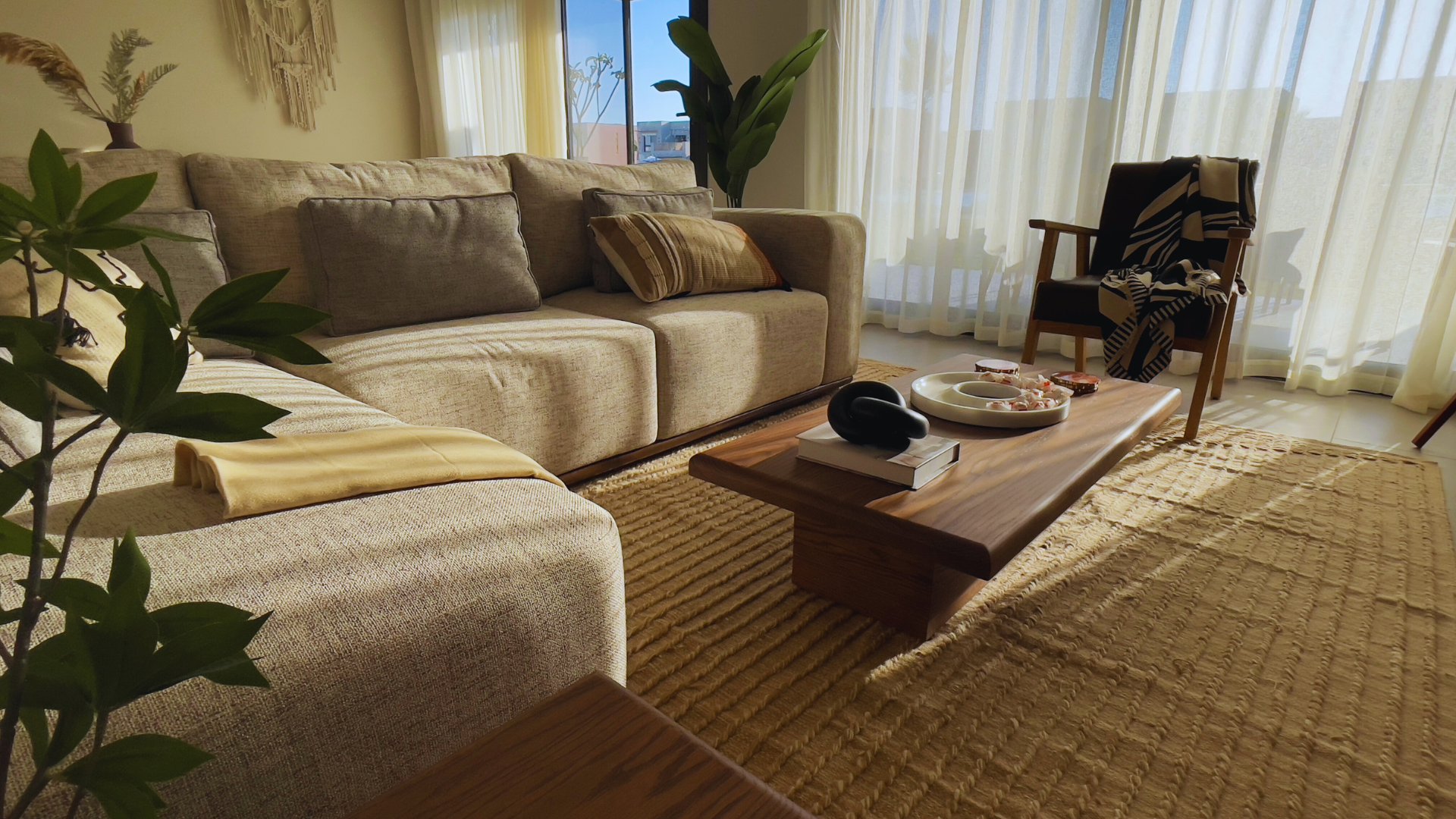
G-Villa PLAYA is our most recent project. It sits on the North Coast of Egypt, in the Sahel, where most homes exist for a few months a year and then sit empty the rest of the time. The brief was to design a summer home that feels lived in from day one, with the kind of calm you only get when a room is built around natural light and materials that age well in salt air.
We applied our Bohemian Retreat style, which is built on warm oak, textured beige linen, woven natural fiber, and a soft linen blend. The full project, including the renders and the final install photos, is on the G-Villa PLAYA project page. The page is the clearest way to see what we did. This post is the story of how we got there.
The Sahel sets the rules
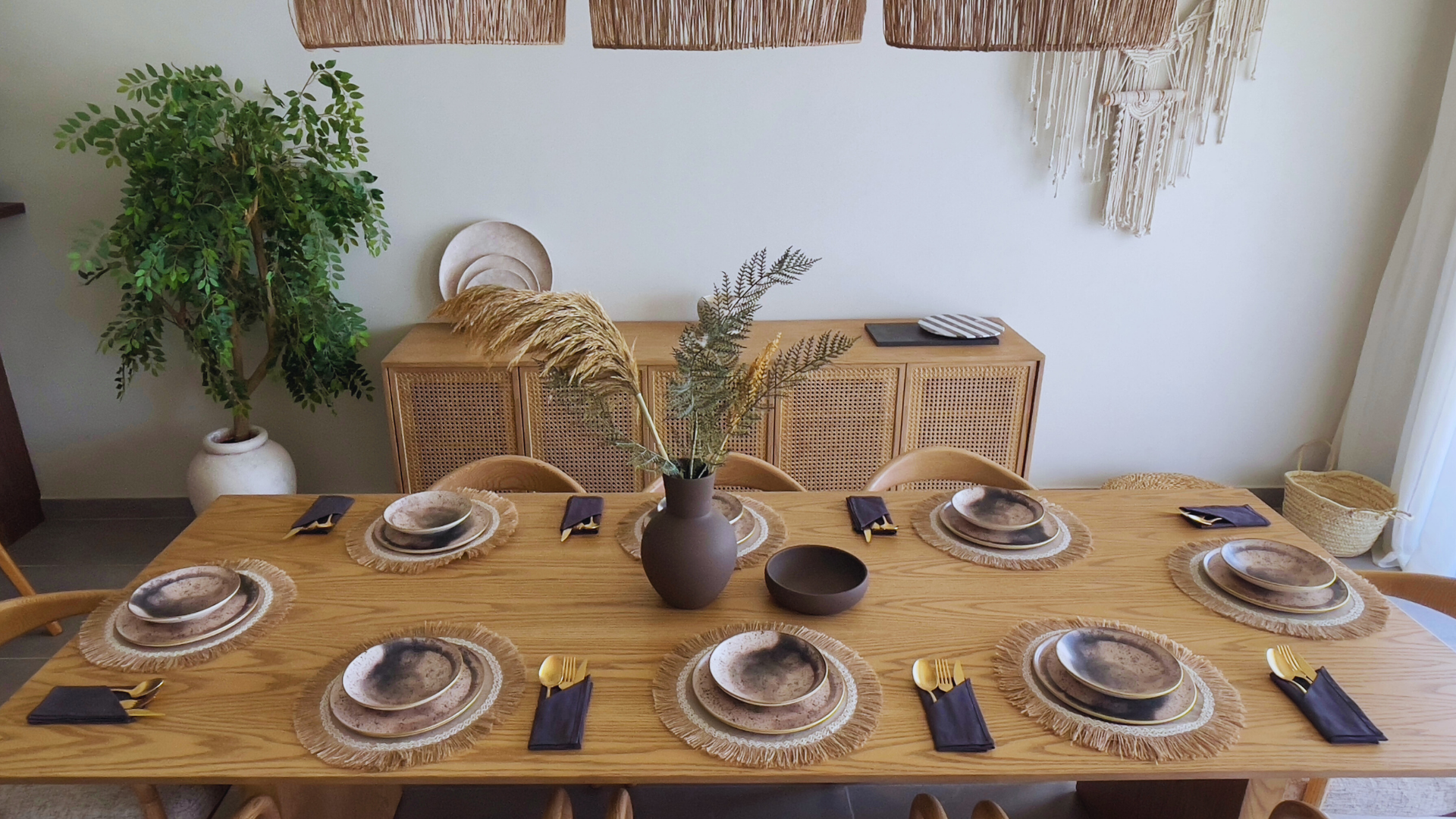
A Sahel home is not a Cairo home with different art. The light is harder, the air carries salt, and humidity swings through the day. Anything that does not handle those three things fails within a season. We design for that. The first rule on G-Villa PLAYA was that every soft material had to be removable, washable, or replaceable. The second was that every wood surface had to be either oak or eucalyptus, both of which hold up along the coast without warping or graying out.
The site itself is also more open than a typical city villa. The kitchen, dining, and lounge flow together, and the entire back of the house opens onto a terrace that runs the full width of the plot. That meant the indoor palette had to read as an extension of the outdoor space, not as a separate room you walk through on the way outside. We chose colors and materials that could survive the transition: the warm oak floors continue out onto the deck, the woven rattan of the dining chairs reappears in the outdoor lounge, and the linen slipcovers on the indoor sofa are the same fabric used on the outdoor cushions.
What the Bohemian Retreat style means in a North Coast context
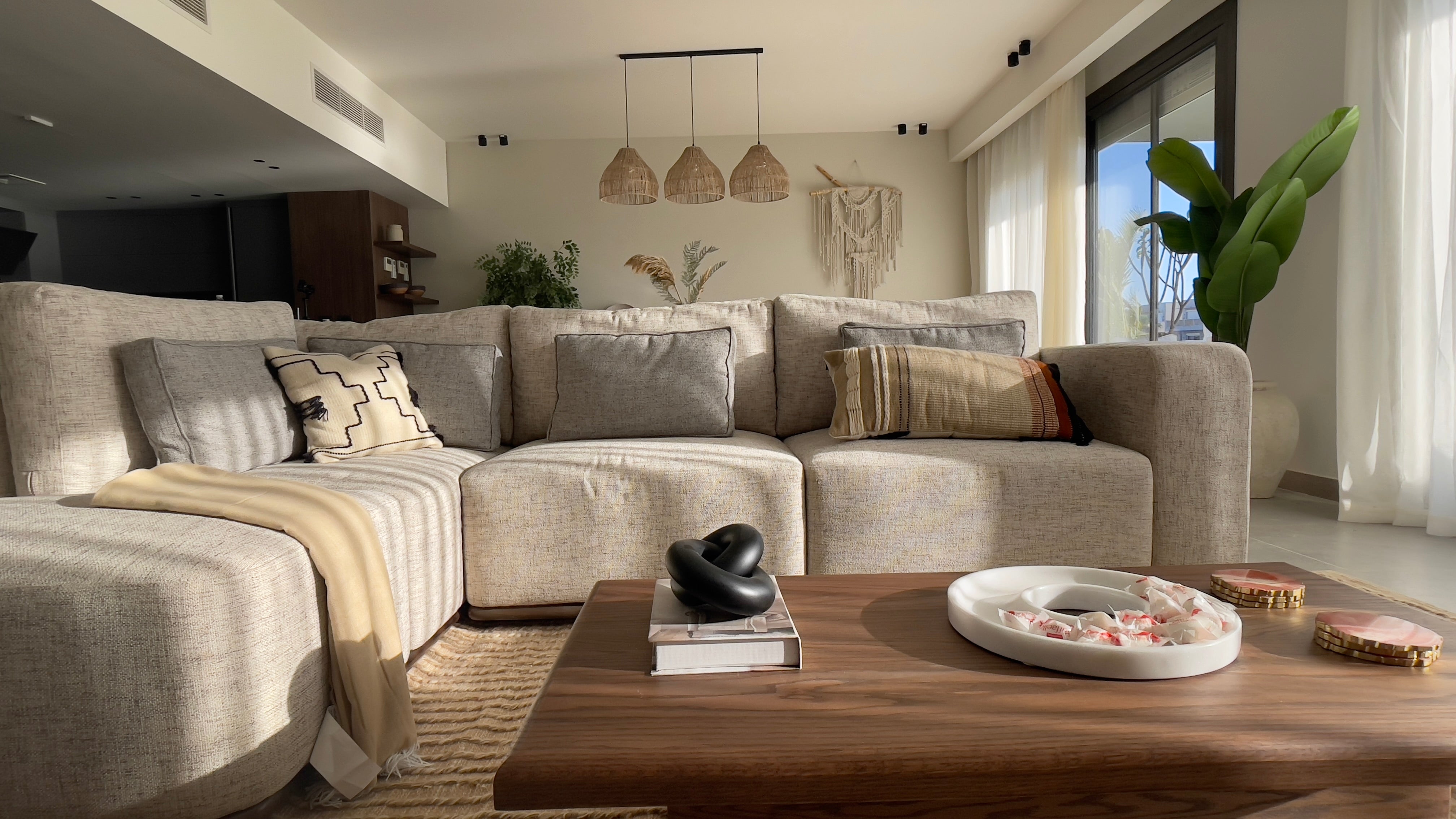
The Bohemian Retreat style is one of our six signature systems. On the styles page, it reads as earthy neutrals, raw textures, and soft light. In a Sahel villa, that translates into specific material choices rather than a feeling. The palette is creamy off-white, warm tan, rich oak, warm stone, and a single muted olive green used on one accent piece. There is no black, no high-gloss finish, and no chrome. Anything that would mark or rust in salt air was off the table from the start.
The living room is the clearest expression of the system. A low-profile linen sectional anchors the room, with a walnut coffee table and a jute rug underfoot. Three woven rattan pendants drop from the ceiling over the table, and a macrame wall hanging softens the back wall. The cushions are linen and cotton in muted stripes, and a single olive throw sits across the arm of the sofa. Nothing is there to be admired from a distance. Everything is there to be used, sat on, and washed.
The bedroom as a quiet retreat
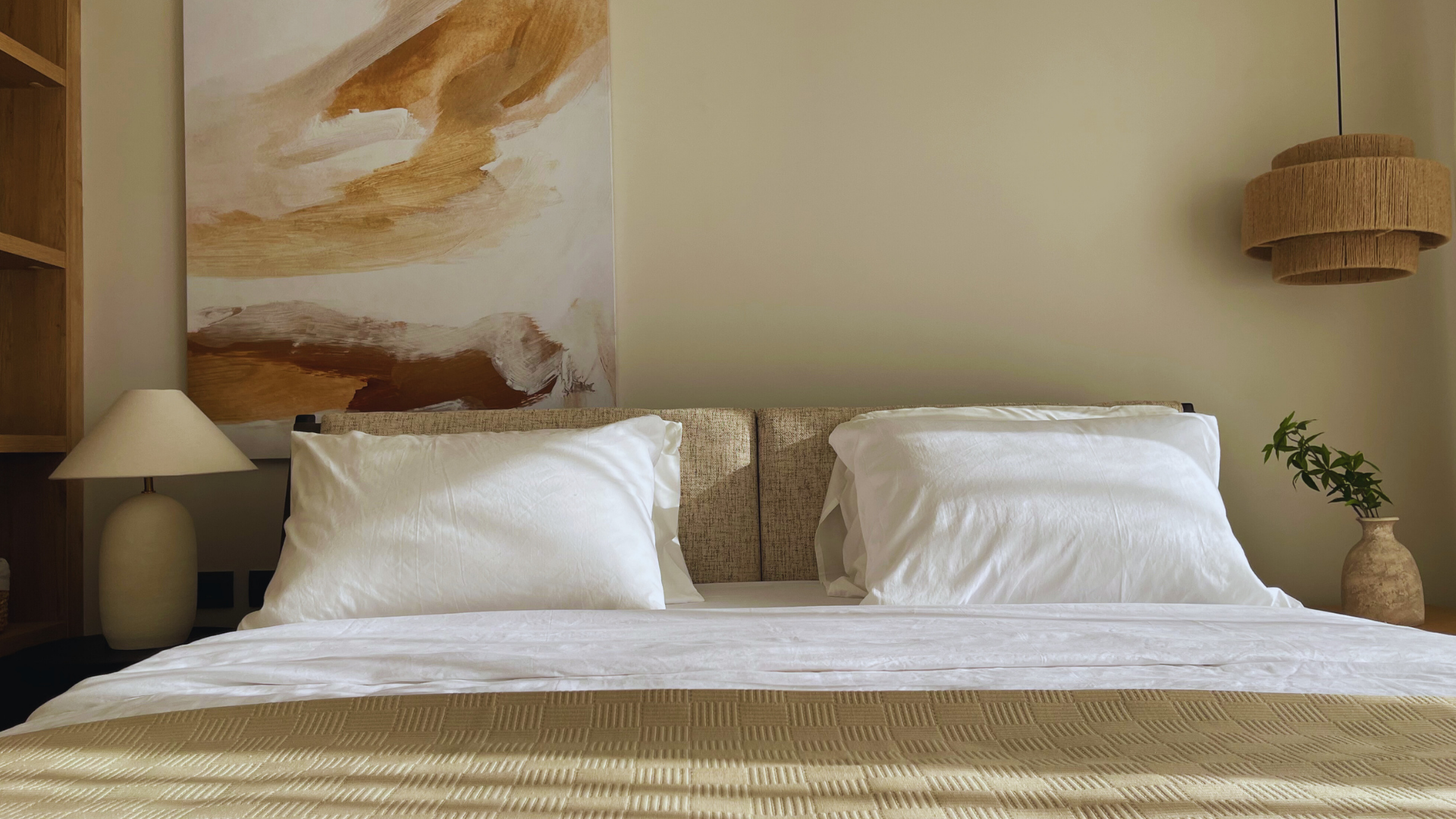
The master bedroom is the room we spent the most time on, because the Sahel is a place where you sleep with the windows open and the room needs to feel calm before the heat of the day starts. We used the same warm oak on the bed platform and the headboard is upholstered in a woven natural fiber, not leather or velvet. The bedding is white linen with a single textured throw across the foot, and the only lighting is a jute pendant and a small ceramic table lamp. There is no television, no desk, no clutter.
The art on the wall is a single large piece in earthy brown and beige tones. The shelf beside the bed holds a few books, a small textured vase, and a sprig of dried olive branch. We designed the room so that everything in it has a reason to be there, and so that a guest can walk in, drop their bag, and immediately feel like the room has been lived in for years.
How the indoor and outdoor connect
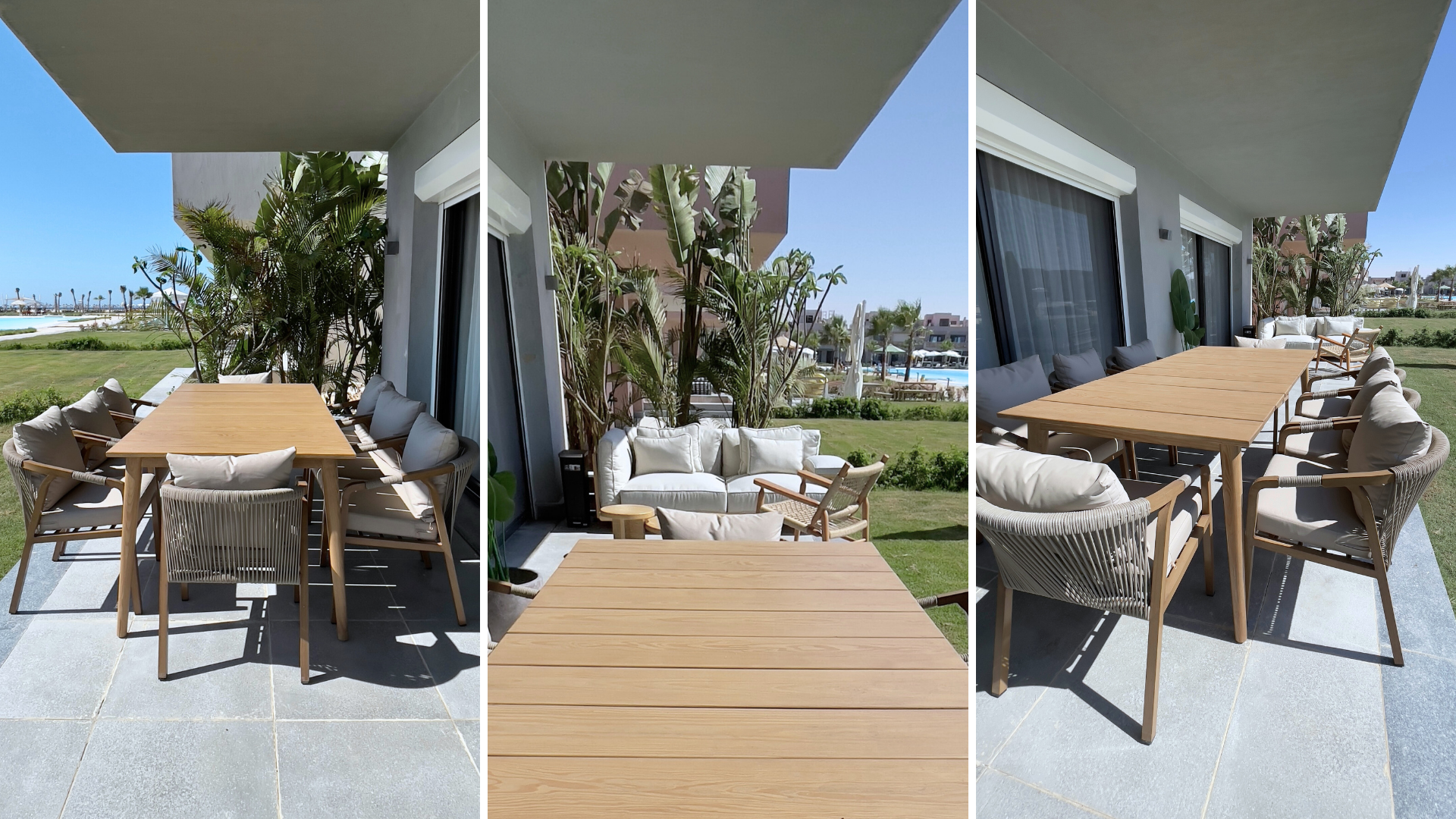
The terrace is the reason this house works as a summer home. It runs along the back of the house, with a pergola made of natural eucalyptus branches providing partial shade. The gaps in the branches let the sun through in moving patterns across the day, which means you get the shadow play without ever feeling closed in. The same woven rattan that appears on the indoor dining chairs shows up again in the outdoor lounge chairs, and the linen used indoors is replaced with an outdoor-grade beige linen for the terrace cushions.
We built a U-shaped concrete bench along one edge of the terrace, which is the most-used piece of furniture in the entire project. It wraps around a low firepit that we use on the cooler Sahel nights when the wind comes off the sea. Around the edges of the deck, we planted olive trees in large terracotta pots, with dry-climate grasses between them. The whole system is irrigated by a concealed drip line so nothing is left to dry out when the house is empty between summers.
What we learned on this project
G-Villa PLAYA is the project that taught us how to run a coastal install. Most of our work is in Cairo, where the climate is forgiving. The Sahel exposes every shortcut. Linen that looked fine indoors started pilling on the terrace until we switched to the outdoor-grade weave. The first batch of cushions faded within a month under direct sun, and we replaced them with a UV-resistant fabric. The eucalyptus pergola needed an extra coat of oil after the first summer. None of this came as a surprise, and we now use G-Villa PLAYA as the reference project for every Sahel job that follows it.
If you are planning a home on the North Coast, in the New Administrative Capital, or anywhere in Egypt, the same process applies. We work from the brief to the install under a single turnkey service, which is what we call From Design to Key. The full project page for G-Villa PLAYA, including all the install photos, is on the site at movnw.com/pages/playa. To start a conversation about your own project, reach the team on WhatsApp at +20 109 166 3099.
movnw